
Feature
What Painful Blinking May Mean—and When Your Eye Needs Care
By Dale Corrigan · · 18 min read
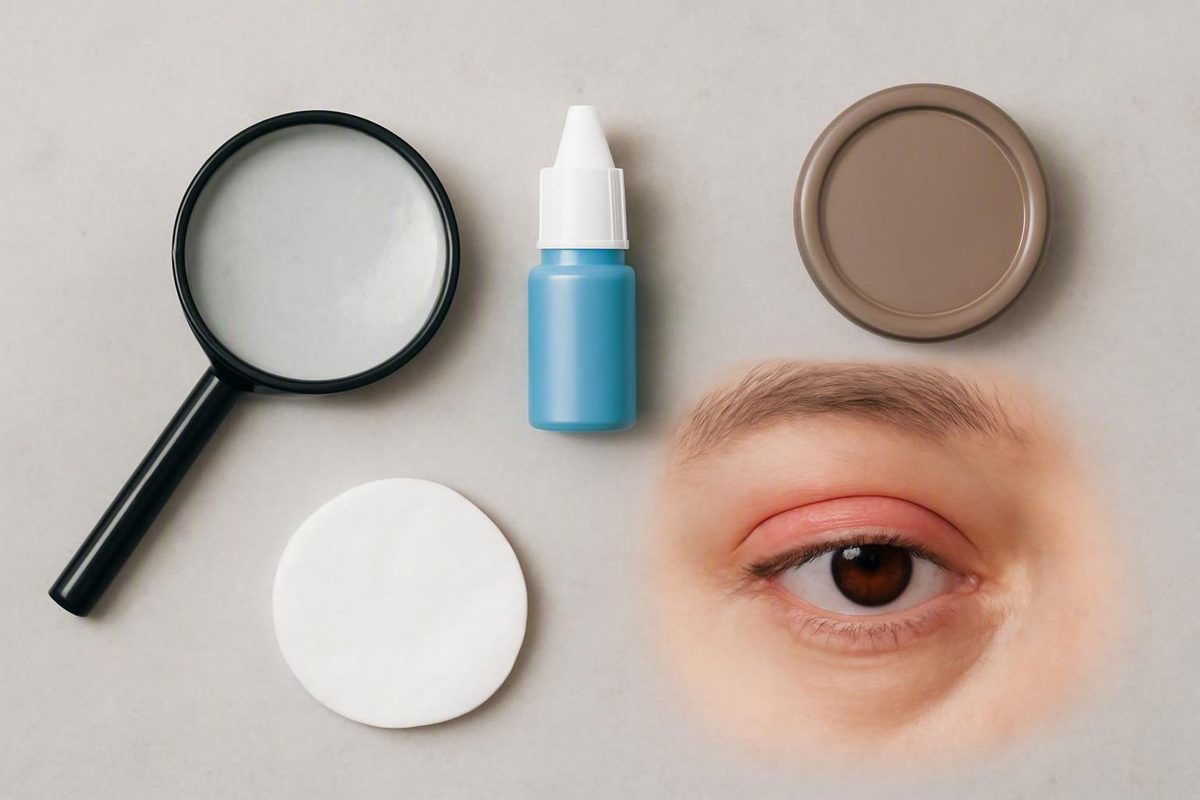
Pain when you blink can come from the eyelid itself or from the eye surface beneath it. A swollen gland, tender lump, or inflamed eyelid edge may hurt when the lids meet. Alternatively, the eyelid may be moving across a dry, irritated, scratched, or debris-covered cornea.
A bump, crusting, itching, discharge, grittiness, or swelling may help narrow the possibilities, but these features overlap and cannot confirm a diagnosis.
Do not rely on self-diagnosis if you have severe or deep eye pain, a new vision change, pronounced light sensitivity, intense redness, spreading swelling, a significant injury, chemical exposure, or a suspected embedded object. These features require urgent professional assessment. Vision disturbances, deep pain, severe headache, light sensitivity, and severe redness are recognized warning signs.
This article provides general educational guidance, not an individual diagnosis. Painful blinking can sometimes involve the cornea or deeper structures that cannot be evaluated properly at home.
Why blinking can make an eyelid or eye hurt
Every blink moves the eyelid across the cornea, the clear and highly sensitive front surface of the eye. Blinking also brings the upper and lower lids together, briefly pressing the lid margins and any swollen tissue within them.
That movement can make two broad categories of problems more noticeable:
- Inflammation in the eyelid. A sore oil gland, stye, chalazion, or inflamed eyelid margin can be compressed or rubbed whenever you blink.
- Irritation on the eye surface. Loose debris, dryness, or a corneal scratch can hurt as the eyelid passes over the sensitive area. Dust, sand, or an eyelash may also become trapped beneath the lid and rub the cornea repeatedly. Debris and corneal scratches can become particularly painful as the eyelid crosses the cornea.
What feels like “eyelid pain” does not necessarily begin in the outer lid. The discomfort may originate:
- At the lash line or eyelid edge
- Inside the eyelid
- On the corneal surface
- At the inner corner of the eye
- In tissue around the eye
- Deeper within or behind the eye
Try to describe both the location and the quality of the pain. Is there one localized tender spot? Does the eye feel gritty, sandy, scratchy, or burning? Is the pain pressure-like, throbbing, or deep and aching? Does it occur only while the lid moves, or does the eye also hurt while held open?
These descriptions can guide an eye examination, but they cannot establish the cause. A scratch, foreign particle, dry eye, blepharitis, conjunctivitis, or internal stye can all make blinking uncomfortable.
Also note whether one or both eyes are affected and whether you can see a lump, crusting, discharge, or broad redness. Symptoms in both eyes may fit dryness or allergy, while one sharply localized tender area may fit a stye or foreign particle. Neither pattern is definitive.
Most importantly, severe pain or any new vision change should not be managed by repeatedly checking symptoms at home. Some causes of eye pain require magnification, directed lighting, or other parts of a professional examination to identify.
Match the accompanying symptoms to the main possibilities
The table below is an orientation guide, not a diagnostic checklist. Several conditions can produce the same feature, and more than one problem may occur at once. For example, eyelid inflammation may aggravate surface dryness. The patterns summarized here reflect the overlapping presentations described in eye-care guidance on common causes of pain during blinking.
| What you notice | A possible explanation | What to keep in mind |
|---|---|---|
| Tender, red bump near the eyelashes | Stye | Often localized and painful; a bump inside the lid may rub the eye |
| Persistent eyelid lump that becomes less painful | Chalazion | Associated with a blocked oil gland; the lump may remain after tenderness fades |
| Redness, burning, soreness, or crusting along the lash line | Blepharitis | May also cause itching, grittiness, tearing, swelling, or dry-eye symptoms |
| Itching, watering, and puffy eyelids, especially in both eyes or after an exposure | Allergy | Rubbing can intensify irritation; allergic symptoms are not contagious |
| Broad redness with tearing, irritation, crusting, or discharge | Conjunctivitis | Symptoms alone cannot reliably distinguish viral, bacterial, and allergic forms |
| Gritty or burning discomfort without a distinct lump | Dry eye | Discomfort may occur during blinking but is not necessarily limited to each blink |
| Sharp or gritty pain with tearing, blurred vision, or light sensitivity | Loose debris or corneal abrasion | More concerning after dust, rubbing, makeup application, trauma, or contact-lens wear |
| Pain concentrated at the inner corner | Irritation in or around that area | Pronounced, worsening, or unexplained pain needs professional evaluation |
| Deep pain, impaired vision, severe headache, intense redness, or pronounced light sensitivity | Warning sign rather than a home diagnosis | Seek urgent assessment rather than continuing symptom matching |
A stye and conjunctivitis illustrate why location matters. A stye tends to produce a localized painful eyelid lump. Conjunctivitis more broadly affects the white of the eye and the tissue lining the eyelid, potentially causing redness, tearing, burning, crusting, or discharge. Swelling can occur with either condition, so appearance alone is not conclusive. A health-system comparison describes these overlapping but differently distributed symptoms.
Discharge is also an imperfect clue. It may occur with conjunctivitis, but it does not by itself prove that bacteria are responsible. The distinction matters because treatment depends on the cause.
Sharp pain, persistent foreign-body sensation, tearing, hazy vision, or light sensitivity deserves particular attention after an exposure or injury. Those symptoms may reflect debris or damage to the corneal surface rather than an ordinary eyelid problem.
Do not use symptom matching to normalize deep pain, altered vision, severe headache, pronounced light sensitivity, or rapidly increasing redness or swelling. Those are reasons to stop monitoring the problem at home and obtain professional assessment.
Eyelid causes: styes, chalazia, and blepharitis
A problem arising in the eyelid often produces a tender spot, visible lump, or irritation concentrated along the eyelashes. Three possibilities are a stye, chalazion, and blepharitis.
A stye is a localized, painful eyelid lump involving an inflamed or infected oil gland or eyelash follicle. It may appear red and tender near the eyelashes, although some styes form inside the eyelid. An internal stye can press or rub against the eye, making each blink especially uncomfortable.
A chalazion is associated with a blocked eyelid oil gland rather than the same type of active infection. It may feel deeper within the lid, become larger, or persist after its initial tenderness fades. A lump that has become less painful may therefore fit a chalazion, but tenderness and appearance cannot confirm the distinction.
Eyelid lumps can resemble one another, and symptoms may change over time. A persistent, recurrent, or unusual lump should be examined rather than repeatedly treated on the assumption that it is harmless.
Blepharitis is inflammation along the eyelid margins. It may cause soreness, redness, swelling, burning, itching, crusting around the eyelashes, grittiness, tearing, or dry-eye symptoms. Because several underlying problems can cause eyelid inflammation, its cause cannot reliably be determined at home. Hospital patient guidance describes this broad symptom pattern and the role of professional evaluation.
For mild gland-related irritation without warning signs, a clean warm compress may provide comfort and help soften thickened eyelid oils. It should feel comfortably warm, not hot enough to burn. Do not treat one exact compress schedule as universally appropriate because the correct care depends on the diagnosis.
Gentle eyelid hygiene may also help when irritation or crusting is concentrated along the lash line. Wash your hands first, and avoid harsh cleansers, forceful scrubbing, or homemade preparations. Pause eye makeup and contact-lens wear while the eyelid is painful or inflamed.
Do not squeeze, pop, lance, or attempt to drain a suspected stye, chalazion, or unexplained eyelid lump. A clinician may perform a procedure for a persistent lump when appropriate, but that is not home care.
Arrange an eye examination if a lump:
- Is becoming larger or more painful
- Keeps returning
- Causes substantial swelling
- Is accompanied by spreading redness
- Affects vision or obstructs the eye
- Persists without a clear explanation
- Fails to improve
Painful swelling spreading around the eye is not a routine stye-care situation. If the swelling is extensive or vision is reduced, seek urgent care rather than relying only on compresses.
Eye-surface causes: dry eye, allergies, and conjunctivitis
Sometimes blinking hurts because the lid is moving across an irritated surface rather than because the eyelid itself is the source of the problem.
With dry eye, the eyes may not produce enough tears, or the tear layer may evaporate too quickly. The resulting surface irritation can make eyelid movement uncomfortable. Possible features include grittiness, burning, redness, fluctuating irritation, or a sensation that something is in the eye.
Prolonged screen use and low-humidity environments may contribute to dryness, but they do not prove that dryness is the cause. Dry-eye discomfort can also continue between blinks rather than occurring only when the eyelid moves.
Eye allergies may cause itching, watering, redness, burning, and swollen or puffy eyelids. Both eyes may be affected, particularly after an allergen exposure. Rubbing can worsen inflammation and may introduce debris or scratch the eye surface.
Conjunctivitis is inflammation of the conjunctiva, the tissue covering the white of the eye and lining the inside of the eyelid. Possible signs include broad redness, irritation, tearing, crusting, and discharge. Viral, bacterial, and allergic forms can look similar, so redness or discharge alone cannot determine the type.
Viral and bacterial conjunctivitis can spread when contaminated eye secretions reach another person’s eyes. Allergic conjunctivitis is not contagious. When infectious conjunctivitis is plausible:
- Wash your hands regularly.
- Avoid touching or rubbing your eyes.
- Do not share towels, pillowcases, cosmetics, or eye products.
- Keep eye-product applicator tips away from the eye and eyelashes.
- Pause contact-lens use while the eye is red, painful, or irritated.
These distinctions and hygiene precautions are important because infectious and allergic conjunctivitis require different approaches.
Antibiotics apply only to selected bacterial conditions. They do not treat viral or allergic conjunctivitis and should not be started from leftover medication or borrowed from another person. An examination may be needed to determine whether antimicrobial treatment is appropriate.
Do not assume that a red or discharging eye is routine “pink eye” when there is moderate-to-severe pain, blurred vision, pronounced light sensitivity, intense redness, or worsening symptoms. Those features may accompany corneal or deeper-eye disease and require prompt assessment.
Debris, corneal scratches, contact lenses, and chemical exposure
Pain that begins after dust, rubbing, makeup application, an impact, contact-lens wear, or a chemical splash calls for a different response from a gradually developing eyelid bump.
Loose debris
Dust, sand, an eyelash, or another small particle may sit on the eye or become trapped beneath the eyelid. Each blink can drag it across the sensitive cornea, producing sharp, scratchy, or gritty pain.
If you believe the material is loose and there is no indication that it is embedded, gently rinse the eye with clean water or sterile saline. Do not continue rubbing, digging under the lid, or using tools or swabs to search for the particle.
If rinsing does not relieve the discomfort, stop attempting removal and arrange an examination. Persistent foreign-body sensation can mean that debris remains beneath the eyelid or that the cornea has already been scratched.
Do not try to remove an object that appears embedded, remains fixed in the eye, or followed a high-speed impact. Seek urgent professional assessment.
Corneal abrasion
A corneal abrasion is a scratch on the clear front surface of the eye. Possible symptoms include:
- Sharp or gritty pain, often worse while blinking
- Persistent foreign-body sensation
- Tearing
- Redness
- Blurred or hazy vision
- Light sensitivity
Abrasions may follow debris exposure, vigorous rubbing, a fingernail, makeup application, minor trauma, or improper or prolonged contact-lens wear. Pain during blinking, tearing, grittiness, light sensitivity, and hazy vision can occur with a corneal abrasion.
Do not patch a possibly injured eye unless a clinician directs you to. Do not self-start antibiotics, anesthetic drops, steroid drops, or other prescription products. Avoid using redness-relief drops merely to conceal redness while pain continues. Treatment depends on the injury and whether other corneal disease or infection is present.
A dedicated pathway for contact-lens wearers
If eye pain begins while you are wearing contact lenses:
- Remove the lenses.
- Do not reinsert them while the eye remains painful, red, irritated, blurry, or light-sensitive.
- Do not use a lens to “test” whether the eye feels better.
- Arrange prompt professional assessment if pain occurs with redness, discharge, blurred vision, persistent foreign-body sensation, or light sensitivity.
Contact-lens-associated pain and redness may involve the cornea and should not automatically be treated as routine dryness or ordinary lens discomfort. Guidance for mild eye symptoms specifically advises removing lenses and obtaining professional evaluation for contact-lens-related pain and redness or other warning signs. See the eye-care guidance on home measures and escalation.
Chemical exposure
A chemical splash is not ordinary irritation. Begin rinsing the eye immediately with plenty of clean water or sterile saline, and obtain urgent professional guidance. Do not postpone irrigation while trying to identify the chemical or searching for special drops. Immediate rinsing after chemical exposure is specifically recommended in medical guidance on painful blinking and eye exposure.
Safe first steps for mild symptoms
Home measures are temporary, symptom-matched comfort steps—not treatment of a confirmed diagnosis. They are appropriate only when symptoms are mild and there is no vision change, severe or deep pain, pronounced light sensitivity, spreading swelling, significant injury, chemical exposure, suspected embedded object, or contact-lens-associated painful redness.
Start by reducing further irritation:
- Do not rub or repeatedly press on the eye.
- Pause contact-lens wear.
- Stop eye makeup until the eye and eyelid feel normal and the cause is clear.
- Wash your hands before touching the surrounding skin.
- Avoid smoke, dust, or another apparent trigger when practical.
For uncomplicated dryness, preservative-free artificial tears may soothe the surface. Taking breaks from screens and consciously blinking during sustained close work may also help. If drops increase the pain, symptoms persist, or vision fluctuates significantly, arrange an examination.
For a mild tender eyelid bump or blocked-gland pattern, apply a clean, comfortably warm compress. Do not use excessive heat, press hard, or try to force material from the lump.
For allergy-like itching or puffiness, a clean cool compress may be more soothing. Avoid rubbing and move away from a suspected irritant when possible. Substantial pain rather than mild itching or irritation should not automatically be attributed to allergy.
For eyelid-edge crusting, gentle eyelid hygiene may help. Loosen crusts carefully without scraping the skin or using harsh soap near the eye. Avoid homemade washes and ingredients not intended for use around the eyes.
For apparently loose debris, gentle rinsing with clean water or saline is reasonable. Persistent discomfort after rinsing requires assessment rather than repeated manipulation.
These measures are limited to mild symptoms; eye-care guidance recommends evaluation when pain worsens or occurs with vision changes, light sensitivity, discharge, injury, persistent debris, or contact-lens-related redness.
What not to do
-
Do not squeeze, pop, lance, or drain an eyelid lump.
-
Do not overuse redness-reliever drops to conceal continuing redness.
- Do not patch a potentially injured eye without clinician direction.
- Do not attempt to remove an embedded object.
- Do not wear or reinsert contact lenses while symptoms continue.
- Do not self-start antibiotics, steroid drops, anesthetic drops, or someone else’s prescription medication.
- Do not let temporary relief delay care for a vision change or another warning sign.
There is no universal number of days during which unexplained eyelid or eye pain is guaranteed to be safe to monitor. The appropriate response depends on the severity, associated symptoms, injury history, contact-lens use, and whether the condition is improving or worsening.
Arrange an examination when symptoms persist, worsen, recur, produce substantial discharge, or remain unexplained.
When painful blinking needs prompt or urgent care
Use the severity and accompanying symptoms—not simply whether you can see a bump—to decide how quickly to seek care. In this guide, urgent assessment means stopping home monitoring and obtaining professional help without delay. Prompt assessment means contacting an eye-care professional rather than continuing to rely on home measures.
Seek urgent assessment
Obtain urgent professional help for:
- Loss of vision or another new vision change
- Severe, sharp, or deep eye pain
- Pronounced light sensitivity
- Intense or rapidly increasing redness
- Severe headache accompanying eye pain or visual symptoms
- Spreading eyelid or facial redness and swelling
- Significant trauma or a high-speed eye injury
- Chemical exposure
- A suspected embedded object
- Painful swelling around the eye with reduced vision
Painful swelling around the eye accompanied by reduced vision may indicate a serious infection and should not be managed only with warm compresses. Vision changes, moderate-to-severe pain, marked light sensitivity, intense redness, and worsening symptoms are among the features that eye-care guidance identifies as requiring immediate or prompt evaluation. Review the warning signs described by an eye-care provider.
Arrange prompt assessment
Contact an eye-care professional promptly for:
- Pain and redness associated with contact-lens wear
- Contact-lens-associated light sensitivity or blurred vision
- Persistent or worsening pain
- Substantial or unusual discharge
- A recurrent eyelid lump or repeated eyelid inflammation
- Swelling that persists or continues to increase
- Pain after debris exposure that remains after gentle rinsing
- Symptoms without a clear, mild, transient explanation
Cautious monitoring may be reasonable
Temporary comfort measures may be reasonable for mild irritation when:
- Vision is normal
- Pain is mild rather than deep or severe
- There is no pronounced light sensitivity
- There was no significant injury or chemical exposure
- The redness or swelling is limited
- Contact-lens-associated pain and redness are absent
- Symptoms begin to improve rather than progress
Even in this lower-risk group, persistent or worsening symptoms should lead to an examination. A lack of visible swelling or a bump does not rule out a corneal scratch, trapped particle, or deeper-eye problem.
An eye examination matters because different conditions can cause similar redness, tearing, pain, and discharge while requiring very different treatment.
What an eye examination and treatment may involve
An eye-care professional will ask where the pain is located and what happened before it began. The examination may include inspection of the eyelashes, eyelid edge, inner eyelid, conjunctiva, and corneal surface. Magnification and directed lighting can reveal a small abrasion, trapped particle, inflamed gland, or surface abnormality that is difficult to see in a mirror.
If an infection is suspected, the clinician may assess the appearance and amount of discharge and, in selected cases, take a swab. Testing depends on the presentation, so a swab is not necessary in every case. An optometry examination may include microscopic inspection and selective swabbing when bacterial infection is suspected.
Treatment must match the identified cause. Depending on the examination, it may involve:
- Lubrication for surface dryness
- Eyelid hygiene or gland care for eyelid-margin inflammation
- Professional removal of accessible debris
- Prescription treatment for selected infections or corneal disease
- A clinician-performed procedure for a persistent eyelid lump
- Further investigation or referral when symptoms suggest deeper disease
Some persistent chalazia or other eyelid lumps may require drainage or another clinician-performed procedure. Never attempt to reproduce such a procedure at home.
Antimicrobial treatment may be necessary for selected bacterial infections or corneal disease, but it requires diagnosis and professional oversight. Antibiotics are not a general treatment for every red, painful, crusted, or discharging eye. They do not treat allergic inflammation or viral conjunctivitis.
Before an appointment, note:
- The exact location of the pain
- Whether one or both eyes are affected
- When symptoms began and whether the onset was sudden
- Whether there is a bump, crusting, swelling, or discharge
- Whether light is uncomfortable
- Whether vision is blurred, hazy, reduced, or otherwise changed
- Whether you wear contact lenses and when you removed them
- Any recent dust, debris, rubbing, makeup use, injury, or chemical exposure
- Whether the problem has happened before
- Which drops or home measures you have tried
These details can make an examination more efficient, but gathering them should not delay urgent care when warning signs are present.
Why does my eyelid hurt when I blink if there is no bump or swelling?
The pain may be coming from the eye surface rather than a visible eyelid lump. Dryness, a trapped eyelash or particle, a corneal scratch, conjunctival irritation, or inflammation beneath the lid can all become more noticeable when the eyelid moves.
A lack of swelling does not exclude a significant problem. Seek prompt care if the pain is sharp, persistent, or accompanied by blurred vision, light sensitivity, intense redness, substantial discharge, an injury, or contact-lens wear.
How can I tell a stye from a chalazion?
A stye is more likely to be a localized, tender red bump involving an inflamed or infected eyelid gland or eyelash follicle. A chalazion is associated with a blocked oil gland and may feel deeper, become larger, or grow less painful while the lump persists.
The distinction is not definitive without an examination. Do not squeeze either type of lump. Arrange professional evaluation if it worsens, recurs, causes substantial swelling, affects vision, or fails to improve.
Should I use a warm or cool compress for a painful eyelid?
Use a clean, comfortably warm compress for a mild tender eyelid bump, blocked-gland pattern, or eyelid-edge irritation. Warmth may soften gland secretions and provide comfort.
Use a clean cool compress for allergy-like itching or puffiness. In either case, avoid extreme temperatures and pressure on the eye. A compress should not be the sole response to severe pain, vision changes, pronounced light sensitivity, spreading swelling, injury, chemical exposure, or contact-lens-associated redness.
Is painful blinking or conjunctivitis contagious?
Painful blinking itself is a symptom and is not contagious. Whether the underlying condition can spread depends on its cause.
Viral and bacterial conjunctivitis can spread through contaminated eye secretions, whereas allergic conjunctivitis is not contagious. Dry eye and a corneal scratch are not infectious conditions. If infectious conjunctivitis is possible, wash your hands, avoid touching your eyes, and do not share towels, cosmetics, or eye products.
When should a contact-lens wearer seek care for pain when blinking?
Remove the lenses and do not reinsert them while the eye remains painful, red, blurry, irritated, or sensitive to light. Arrange prompt assessment when pain occurs with redness, discharge, light sensitivity, persistent foreign-body sensation, or any vision change.
Contact-lens-associated pain can involve a corneal scratch or infection and should not be dismissed as routine dryness. Severe pain, impaired vision, intense redness, or pronounced light sensitivity requires urgent assessment.
Mild irritation without warning signs may justify cautious, cause-appropriate comfort measures. But painful blinking is not always an eyelid problem: persistent or worsening symptoms need an eye examination. Vision changes, severe or deep pain, marked light sensitivity, spreading swelling, significant injury, chemical exposure, a suspected embedded object, or contact-lens-associated redness warrant prompt or urgent care.